
A Parent’s Guide to Garage Door Safety
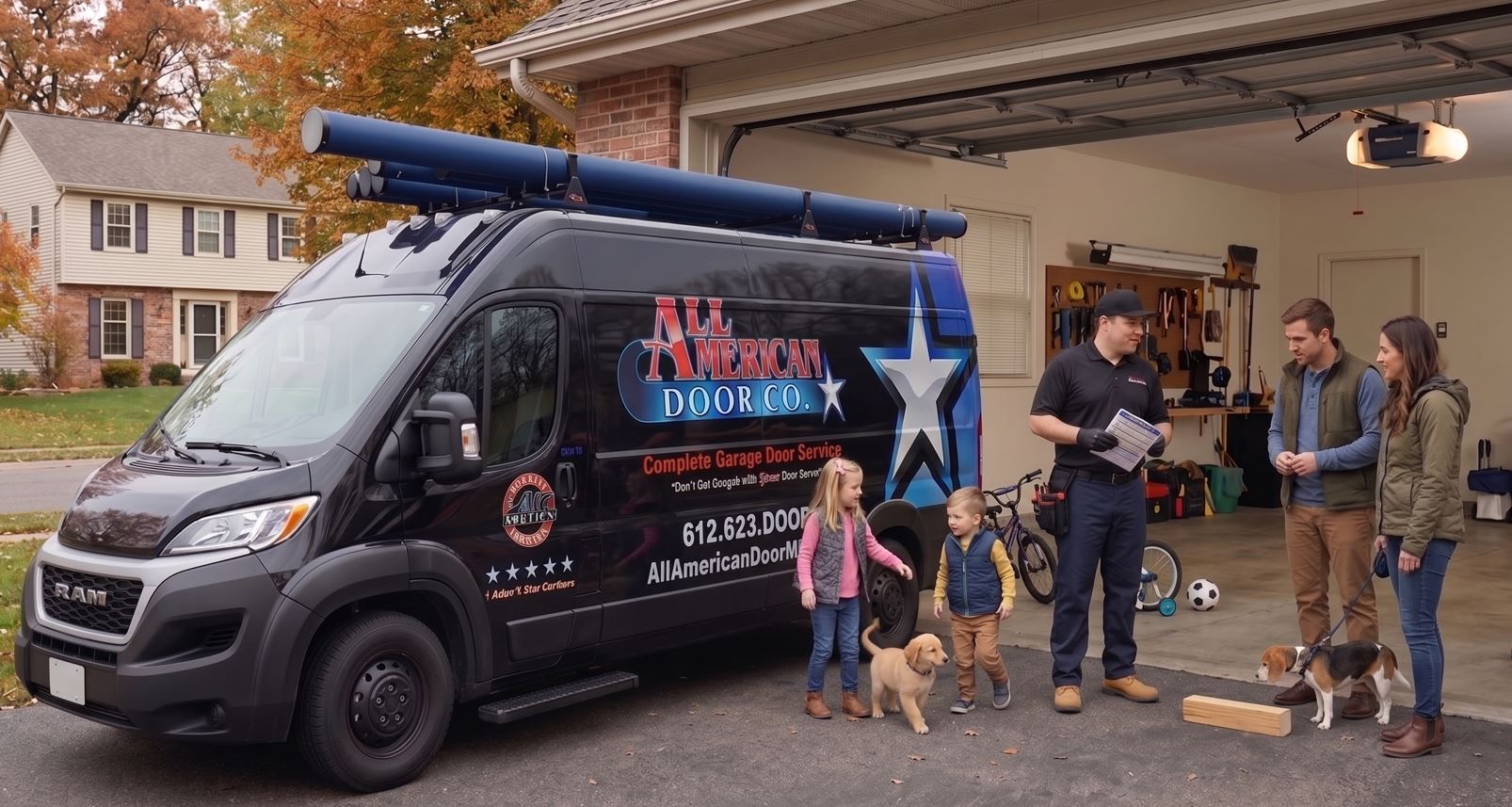
Every afternoon, neighborhoods across the Twin Cities metro come alive. Kids drop their backpacks to ride bikes in the driveway, and dogs dart out into the yard to catch a ball. In many Minneapolis suburbs, your garage functions as the true front door to the home.
Because it gets so much daily foot (and paw) traffic, it’s easy to forget that your garage door is the largest, heaviest moving object in your entire house.
Essential Garage Door Safety Tips for Twin Cities Homeowners
When a heavy overhead door is combined with curious kids or fast-moving pets, minor mechanical issues can quickly turn into major safety hazards. Drawing from years of hands-on garage door repair experience across the Twin Cities, All American Door has put together a practical guide to keeping your family safe.
How Our Anoka County Seasons Impact Safety
Many generic safety articles overlook the impact of local weather in Anoka County. In our harsh Minneapolis winters, freezing temperatures directly jeopardize your door’s safety features:
-
The Ghost Reversal (Sensors vs. Snow): Sub-zero temperatures and melting snow can cause ice chunks or heavy frost buildup to block your photo-eye sensors. If a sensor gets misaligned by a stray snow shovel or caked in road salt grime, the door may refuse to close, or worse, lose its ability to detect a pet darting underneath.
-
Frozen Bottom Seals: If your garage door bottom rubber freezes directly to the driveway surface, forcing the door open can crack panels or snap cables. Conversely, if your door closes onto a mound of hard-packed ice and snow, it can throw off the opener’s travel limits, causing it to miscalculate how much force to apply when closing near children or small animals.
The 3-Step DIY Safety Check Every Parent & Pet Owner Needs
Do not wait for a close call to find out if your automatic reversal system works. Take five minutes this weekend to run these three physical checks:
1. The Photo-Eye Height Check
Look at the electronic safety eyes mounted near the floor on both sides of your garage door track.
The Safe Zone: They must be mounted no higher than 6 inches off the ground. If they are installed too high, a crawling toddler or a small dog or cat can pass underneath the beam entirely without triggering the safety auto-reverse.
2. The 2×4 Block Force Test
This tests the internal logic of your garage door opener.
-
Open your garage door fully.
-
Lay a solid piece of wood (a flat 2×4 or a thick book) flat on the ground directly in the path of the door.
-
Press your wall button to close the door.
-
The Result: When the door strikes the wood, it should immediately stop and reverse back up within two seconds. If it fights the block, pinches down hard, or strains without reversing, your opener’s force settings are dangerously high and require immediate calibration.
3. The Paper Towel Test (For Pets)
While the block test checks physical resistance, you need to know if the invisible photo-eye beam actually triggers correctly. Open the door, activate the close button, and toss an empty paper towel roll or a small toy across the threshold to break the beam. The door should immediately pop back open.
4 Golden Rules to Teach Your Kids Today
Mechanical safety features are only your backup plan; safe habits are your primary defense. Sit down with your kids and establish these firm household rules:
-
The Opener is Not a Toy: Never let children play with handheld remotes or the outside wireless keypad.
-
Mount the Wall Button High: Ensure your interior wall button is mounted at least 5 feet off the ground. Completely out of reach of toddlers, but fully visible to adults operating the door.
-
No Beating the Door: Treat a closing garage door like a closing elevator. Never let kids play a game of dashing underneath the door while it is actively moving down.
-
Keep Fingers Out of the Seams: Teach children never to place their fingers between the door panels when opening or closing. Sectional joints can pinch fingers with immense pressure.
Protecting Your Four-Legged Family Members
Pets behave differently than kids. They are faster, lower to the ground, and easily distracted by a squirrel running past the driveway.
-
Beware of the Short Cat Leash: If you keep your dog or cat on a tie-out or leash near the garage, never let the line cross into the garage door’s path. A dog running inside while the door closes can easily get tangled or trapped.
-
Check the Tracks for Cats: In late autumn and winter, outdoor or stray cats frequently seek out the warmth of a recently parked car engine. Always look under your vehicle and around the overhead tracks before pressing the close button.
-
Inspect Your Weather Stripping: Puppies and kittens love to chew on loose rubber. If your bottom astragal (the rubber weather seal) is torn or hanging down, replace it immediately to prevent pets from chewing on it or getting caught in it.
When to Call the Certified Twin Cities Pros at All American Door
While keeping sensors clean and teaching safety rules are perfect DIY tasks, never attempt to adjust, tighten, or repair garage door springs or lift cables yourself.
The torsion springs on your door are wound under immense mechanical tension. A single snapped cable or loose bracket can cause a catastrophic failure, dropped doors, or severe personal injury. If your door makes a loud squealing noise, moves unevenly down the tracks, or fails the 2×4 block test, it is time to call a professional technician to ensure your home remains completely safe.
Need Help?
Call All American Door at (763) 244–1605 for your garage door safety inspection or contact us online with any questions.